Independent practice site — not affiliated with Immigration, Refugees and Citizenship Canada or the Government of Canada. The official study guide is free on Canada.ca.
This independent lesson is a study aid. Discover Canada is the free official guide.
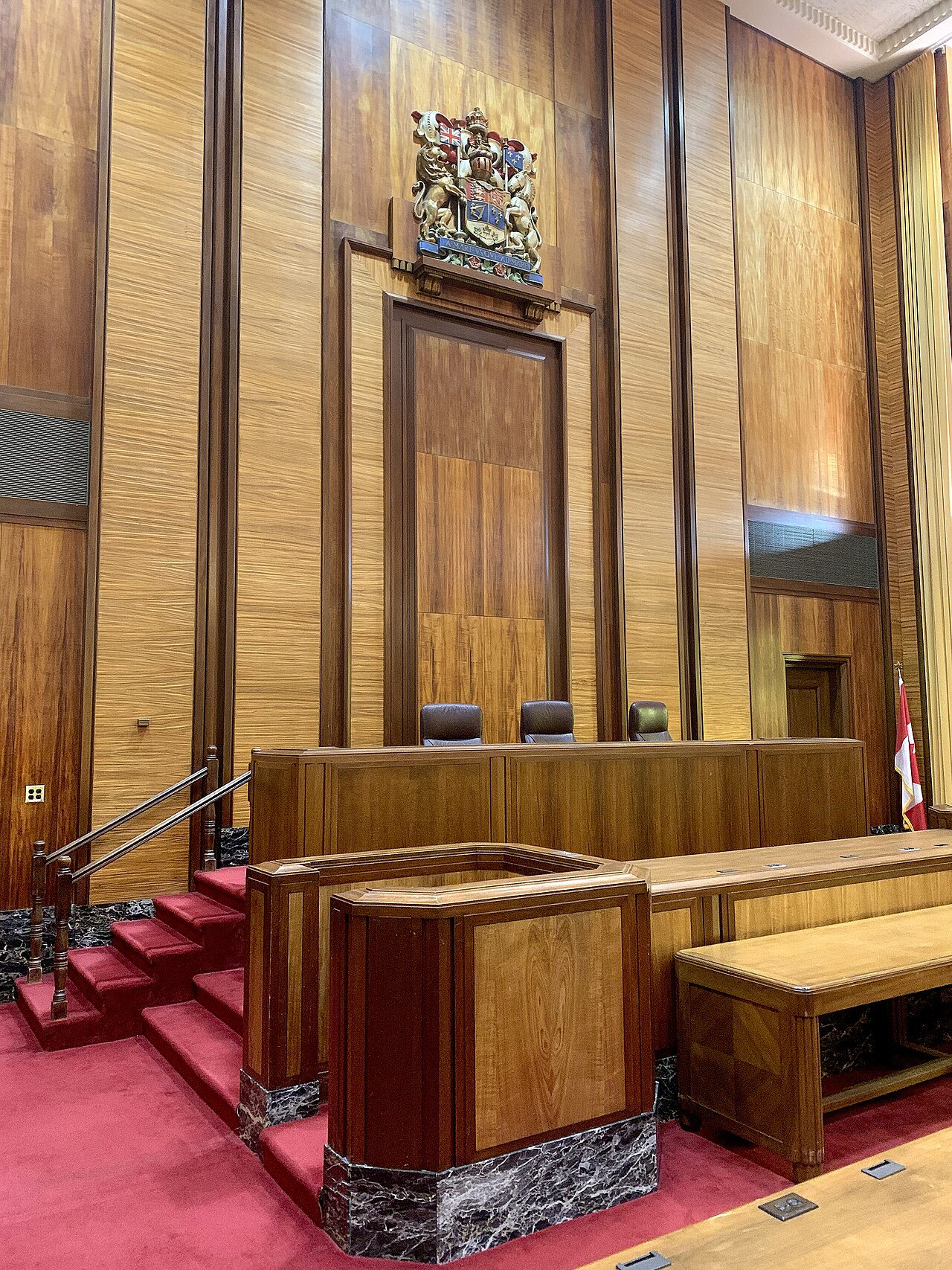
Federal Court of Appeal courtroom inside the Supreme Court of Canada Building in Ottawa. This is not the Supreme Court’s own courtroom.Photograph · Mr Serjeant Buzfuz · Wikimedia Commons · CC0 1.0 · Display cropped by the page layout.
The rule of law
In plain language
Canada has written laws made by elected representatives. The rule of law means everyone must follow the law, including politicians, judges and police officers. Courts offer a peaceful way to settle disputes.
Picture it
A police officer cannot ignore the law because of their job. The same legal rules apply to officials and other people.
Ask yourself
Does the law apply to a judge or politician?
A fair process in criminal cases
In plain language
Due process means the government must respect a person’s legal rights. In a criminal matter, the presumption of innocence means a person is treated as innocent until guilt is proven.
Picture it
Being accused of a crime is not the same as being found guilty. The case must be decided through the legal process.
Ask yourself
What must happen before an accused person can be found guilty?
Courts decide cases
In plain language
Courts settle legal disputes and decide cases. The Supreme Court of Canada is the highest court. Other courts include trial and appeal courts, the Federal Court for matters concerning the federal government, and courts handling family, traffic or small claims matters.
Picture it
A disagreement over a small sum of money can go to a small claims court. A court, rather than the police, decides the dispute.
Ask yourself
Which court is the highest in Canada?
Police help and enforce the law
In plain language
Police help keep people safe and enforce laws. Municipal, provincial and RCMP services have different responsibilities. People can also raise concerns about police conduct through a complaint process.
Picture it
You can ask police for help after a theft or if someone is missing. Reporting an event does not itself decide whether someone is guilty.
Ask yourself
Do police enforce laws or decide guilt in court?
Lawyers and legal aid
In plain language
A lawyer can explain a legal problem and represent a person in court. Legal aid services may offer help at low cost or free of charge to people who qualify; availability and rules vary.
Picture it
Someone who cannot afford a lawyer can ask about local legal aid services. This lesson explains civic roles, not what to do in a personal case.
Ask yourself
Who can represent someone in court?
WORK THROUGH A SCENARIO
Follow a justice question
Imagine that a theft is reported. This simplified path connects the roles in the lesson; real cases do not all follow the same steps.
01
Someone reports a concern
A person reports a stolen bicycle. Police may investigate and gather facts; they do not decide guilt.
02
An accusation is not a conviction
If someone is accused, they are presumed innocent until guilt is proven. Their legal rights must be respected.
03
A court decides
A court hears the case and decides according to evidence and law. The Supreme Court of Canada is the country’s highest court.
04
Help may be available
A lawyer can explain the process and represent a person. Legal aid may be available to eligible people under local rules.
Who decides whether the accused person is guilty?
A court, according to evidence and law. Police investigate and enforce laws; an accusation does not prove guilt.
Who does what in the justice system?
Laws
Elected representatives
Enforcement
Police
Decisions
Courts
Help
Lawyers and legal aid
A way to remember
Remember the roles: elected representatives make laws; police enforce them; courts decide cases; lawyers help people understand and use the legal process. Due process and the presumption of innocence protect fairness.
Check your understanding
Can a public official be above the law?
No. The rule of law applies to everyone, including politicians, judges and police.
Does an accusation prove guilt?
No. In a criminal matter, a person is presumed innocent until guilt is proven through the legal process.
Who settles a dispute: the police or a court?
A court settles legal disputes and decides cases. Police enforce laws and help keep people safe.
Help us improve this site with Firebase Analytics. We send page visits, broad diagnostic milestones and confirmed paid study purchases only if you agree. Privacy Policy