
Independent practice site — not affiliated with Immigration, Refugees and Citizenship Canada or the Government of Canada. The official study guide is free on Canada.ca.

← Study Guide
Lesson 4 · Based on Discover Canada

The People of Canada

Meet the distinct Indigenous peoples of Canada, then explore the French, British and many other communities that shape the country today.

Read this section in the official Discover Canada guide ↗

This independent lesson is a study aid. Discover Canada is the free official guide.

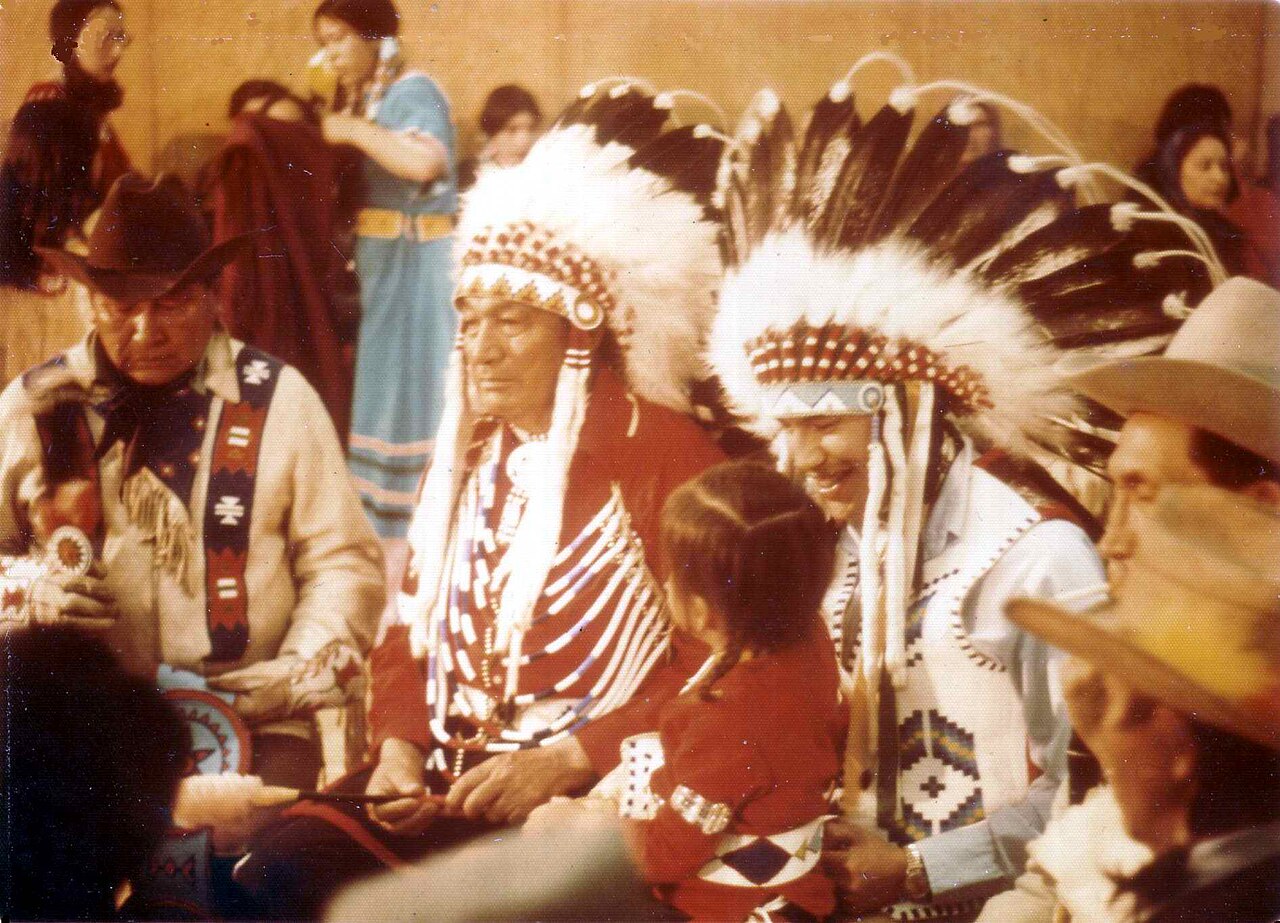
People gathered for a community dance on a Blackfoot reserve in southern Alberta in 1973
Community dance on a Blackfoot reserve in southern Alberta, 1973.Photograph · John Hill · Wikimedia Commons · CC BY-SA 3.0 · Resized copy; share adaptations under CC BY-SA 3.0.

This photograph shows one Blackfoot community gathering, not all First Nations, Inuit or Métis peoples.

First Nations, Inuit and Métis

In plain language

Indigenous peoples lived on these lands long before European arrival. First Nations, Inuit and Métis are three distinct peoples, with their own histories, cultures and communities. Inuit are Indigenous to the Arctic. Métis people formed a distinct culture with Indigenous and European roots; Michif is one of their languages.

Picture it

If a question asks for the three Indigenous peoples recognized in Canada, name First Nations, Inuit and Métis. Do not treat the three names as interchangeable.

Ask yourself

Can you name all three peoples and one way their histories differ?

Treaties, rights and residential schools

In plain language

Indigenous and treaty rights are recognized in Canada’s Constitution. Treaties are agreements between the Crown and particular Indigenous peoples; many treaty promises were not fully respected. For generations, governments sent Indigenous children to residential schools, separating them from families and suppressing languages and cultures. Canada formally apologized to former students in 2008.

Picture it

A treaty is an agreement with specific peoples, not a single agreement that applies identically to everyone. Residential schools caused lasting harm to children, families and communities.

Ask yourself

What are treaties, and why must the history of residential schools be remembered?

French and English in Canada

In plain language

French and English are Canada’s official languages. The federal government provides services in both. Francophone and Anglophone communities have different histories across the country; neither language belongs to only one province.

Picture it

A person can ask for a federal service in French in an English-speaking part of Canada. New Brunswick is the only officially bilingual province.

Ask yourself

Which two languages are official at the federal level?

Acadians and Quebecers

In plain language

Acadians descend from French settlers in the Maritimes. Many were deported between 1755 and 1763 during the Great Upheaval, yet Acadian communities maintained their identity. Quebecers are the people of Quebec, most of whom speak French; Quebec also has a long-standing English-speaking community.

Picture it

An Acadian community in New Brunswick and a Francophone community in Quebec share a language, but have distinct histories and identities.

Ask yourself

What happened during the Great Upheaval, and who are Quebecers?

Immigration and diversity

In plain language

People born in Canada and newcomers from many regions have shaped Canadian life. Communities speak many languages and practise different religions, or no religion. The guide describes a multicultural society united by shared civic principles such as the rule of law and equal treatment under the law.

Picture it

Neighbours may celebrate different traditions and speak different languages at home while sharing the same rights and responsibilities as Canadians.

Ask yourself

How can people keep different traditions while sharing a Canadian civic life?

Three distinct peoples

Living communities, different histories

The image records one moment in a Blackfoot community. Keep these distinctions in mind as you study the chapter.

01

First Nations

Many distinct nations, languages and communities.

02

Inuit

An Indigenous people of the Arctic with their own communities and histories.

03

Métis

A distinct people whose culture includes the Michif language.

A way to remember

Three distinct Indigenous peoples → rights and hard history → official languages → Acadian and Quebec histories → today’s diversity. Remember people as living communities, not only as chapters of the past.

Check your understanding

Are First Nations, Inuit and Métis three names for one people?

No. They are three distinct Indigenous peoples with different histories, cultures and communities.

What happened to many Indigenous children in residential schools?

They were separated from their families and communities, and their languages and cultures were suppressed. The schools caused lasting harm.

Which community experienced the Great Upheaval?

The Acadians. Many were deported from the Maritimes between 1755 and 1763, but Acadian communities maintained their identity.

Official source

Read this section in the official Discover Canada guide ↗