Independent practice site — not affiliated with Immigration, Refugees and Citizenship Canada or the Government of Canada. The official study guide is free on Canada.ca.
A symbol is something that carries shared meaning. Learn what the flag, Crown, anthem, sports and other Canadian emblems represent, rather than memorizing a list of pictures.
This independent lesson is a study aid. Discover Canada is the free official guide.
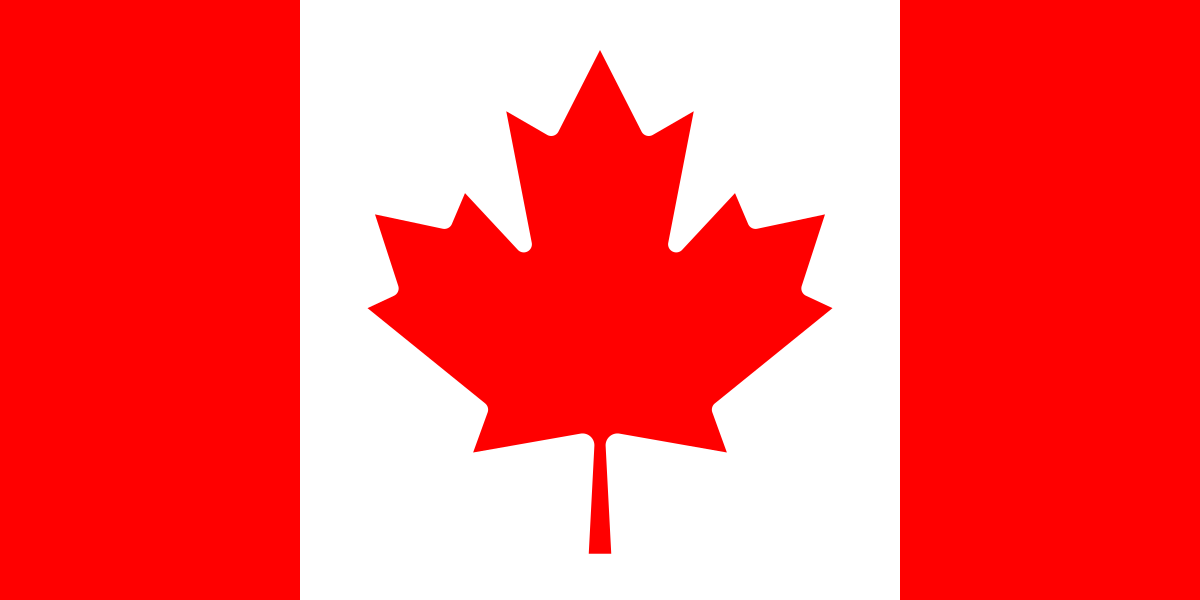
National emblem · 1965The national flag of Canada, first raised in 1965.Flag of Canada · George F. G. Stanley · E Pluribus Anthony · Mzajac · Wikimedia Commons · Public domain · Original SVG, unmodified
This flag is official insignia. It appears here for study; its use does not imply government endorsement.
The flag and maple leaf
In plain language
The red-and-white maple leaf flag was first raised in 1965. The maple leaf was already a Canadian emblem long before then: French Canadians adopted it in the 1700s, and it later appeared on uniforms and memorials. Provinces and territories also have their own flags.
Picture it
At a citizenship ceremony, the flag identifies Canada. The leaf on it recalls a much older symbol; 1965 is the date of the flag, not the first use of the leaf.
Ask yourself
Which came first: the maple leaf as an emblem or the maple leaf flag?
The Crown and Parliament
In plain language
The Crown symbolizes the Canadian state and its institutions, including Parliament, legislatures, courts, police and the armed forces. The Parliament Buildings are another recognizable national symbol. The Peace Tower commemorates service in the First World War.
Picture it
When you see a Crown on a public institution, think of the continuing state, not the personal possessions of a monarch.
Ask yourself
What does the Crown represent in Canada?
Arms, motto and older emblems
In plain language
Canada’s coat of arms brings together symbols of England, France, Scotland and Ireland with maple leaves. Its motto, A Mari Usque Ad Mare, means “from sea to sea.” The fleur-de-lys recalls French history and appears on Quebec’s flag. The beaver recalls the fur trade and appears on the five-cent coin.
Picture it
A five-cent coin points you to the beaver; a Quebec flag points you to the fleur-de-lys. These symbols tell different parts of Canada’s story.
Ask yourself
What does the national motto mean, and which animal appears on the five-cent coin?
Anthems and two official languages
In plain language
“O Canada” was first sung in Quebec City in 1880 and became the national anthem in 1980. English and French are Canada’s two official languages and symbols of identity. The royal anthem, “God Save the King,” honours the sovereign; it is distinct from the national anthem.
Picture it
At an event you may hear “O Canada” in English or French. Do not confuse it with the royal anthem.
Ask yourself
Which song is the national anthem, and what does the royal anthem honour?
Sports that carry history
In plain language
Hockey is Canada’s official winter sport and lacrosse is its official summer sport. Lacrosse has Indigenous origins. The guide also highlights curling, Canadian football and soccer as popular sports.
Picture it
For a winter/summer memory pair, picture skates on ice beside a lacrosse stick on a field.
Ask yourself
Which official sport is linked to Indigenous origins?
Honours and shared dates
In plain language
The Order of Canada, created in 1967, recognizes outstanding contributions. The Victoria Cross is the highest honour for conspicuous bravery in the presence of the enemy. Dates such as Canada Day on July 1 and Remembrance Day on November 11 carry national meaning too.
Picture it
An honour recognizes a person’s contribution or courage; a commemorative day asks a community to remember or celebrate together.
Ask yourself
How do the Order of Canada and the Victoria Cross differ?
Symbol gallery
Images, ideas and stories
Connect each name with what it represents. These original sketches are study cues, not reproductions of official coats of arms.
The Canadian state
The Crown
It represents the continuity of public institutions, including Parliament, courts and the armed forces.
Heritage and geography
Coat of arms
Maple leaves and historic emblems accompany the motto A Mari Usque Ad Mare: “from sea to sea.”
Fur-trade history
The beaver
This emblem recalls a trade that shaped Canada’s history. It appears on the five-cent coin.
The national anthem
O Canada
First sung in 1880, it became the national anthem in 1980. The royal anthem honours the sovereign.
The official sports
Lacrosse and hockey
Lacrosse has Indigenous origins and is the official summer sport; hockey is the winter sport.
Lesson based on the “Canadian Symbols” section of Discover Canada. Royal anthem checked 18 October 2026: Canadian Heritage.
A way to remember
Group the symbols by meaning: flag and leaf → identity; Crown and Parliament → the state; arms and motto → heritage and geography; anthems and languages → shared public life; sports, honours and dates → activities and remembrance.
Check your understanding
Was the maple leaf first adopted as a symbol in 1965?
No. The new maple leaf flag was first raised in 1965, but the leaf had been used as a symbol since the 1700s.
Which is the official summer sport: hockey or lacrosse?
Lacrosse is the official summer sport and has Indigenous origins. Hockey is the official winter sport.
What does A Mari Usque Ad Mare mean?
“From sea to sea.” It is Canada’s national motto, found with the coat of arms.
Is “God Save the King” the national anthem?
No. “O Canada” is the national anthem. “God Save the King” is the royal anthem, used to honour the sovereign.
Help us improve this site with Firebase Analytics. We send page visits, broad diagnostic milestones and confirmed paid study purchases only if you agree. Privacy Policy