Independent practice site — not affiliated with Immigration, Refugees and Citizenship Canada or the Government of Canada. The official study guide is free on Canada.ca.
The oath can feel formal. You do not have to understand it all at once. Let’s unpack each promise, connect it to everyday life, and then check what stayed with you.
This independent lesson is a study aid. Discover Canada is the free official guide.
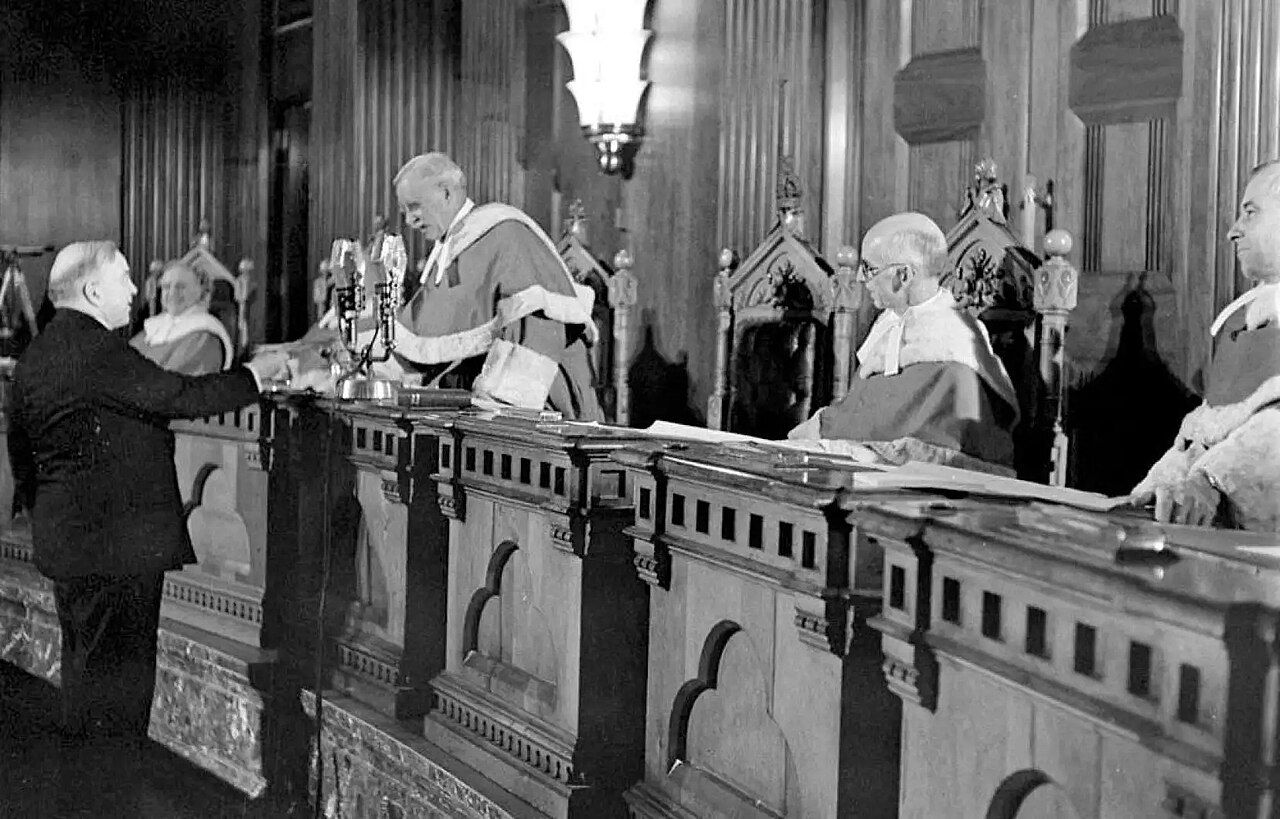
Supreme Court of Canada building in Ottawa, 3 January 1947. Chief Justice Thibaudeau Rinfret presents William Lyon Mackenzie King with a citizenship certificate. Library and Archives Canada reference PA-197418.Archival photograph · Chris Lund / National Film Board of Canada / Library and Archives Canada · Wikimedia Commons · Public domain · Resized for web display.
1947 → today
From study to ceremony
The photograph records a historic ceremony. Your own invitation and current IRCC instructions explain what to do when your ceremony comes.
01
Understand the promise
Study the four ideas in the oath below, then read its current official wording.
02
Take the oath
At your citizenship ceremony, swear or affirm the oath as directed in your invitation.
03
Live the commitment
After the ceremony, put the rights and responsibilities of citizenship into practice.
Learn it from more than one angle
1. A sincere promise
“Swear (or affirm)”
In plain language
Both choices express a serious commitment. “Affirm” lets someone make that commitment without a religious oath.
Picture it
Imagine telling your new community, “You can count on me to take this seriously.” The form of your promise can reflect your own beliefs.
Ask yourself
What matters most here: a particular belief, or the sincerity of the commitment?
2. Allegiance to the Crown
“King of Canada … His Heirs and Successors”
In plain language
Canada is a constitutional monarchy. The Sovereign represents the enduring Canadian state, beyond any one government or election. Today the oath names King Charles III; “heirs and successors” carries the promise forward.
Picture it
A government can change after an election. The oath is a commitment to Canada’s constitutional order, not a promise to support one political party.
Ask yourself
Why does the oath name the King of Canada instead of a prime minister?
3. The law, the Constitution and Indigenous rights
“The laws of Canada, including the Constitution”
In plain language
The promise includes observing Canadian law. It names the Constitution and its recognition and affirmation of the Aboriginal and treaty rights of First Nations, Inuit and Métis peoples.
Picture it
Think of the Constitution as part of the foundation of public life. The oath asks you to remember that Indigenous peoples’ rights are part of that foundation, not an optional footnote.
Ask yourself
Which three peoples are named in this part of the oath?
4. Duties as a citizen
“Fulfil my duties as a Canadian citizen”
In plain language
Citizenship brings rights and responsibilities together. The guide discusses obeying the law, voting, serving on a jury when called, helping others, and caring for our shared heritage and environment.
Picture it
Picture a neighbour voting, answering a jury summons, or helping at a community food bank. Civic life grows through ordinary actions like these.
Ask yourself
Name one civic duty and one way you could help your community.
A gentle way to remember
Promise → Crown → laws and Constitution → duties. Say the four ideas in your own words before looking back. Understanding first makes the official wording easier to remember.
Pause and check your understanding
Is allegiance in the oath to a political party?
No. It is to the Sovereign as King of Canada, who represents Canada’s constitutional order.
Does the oath mention Indigenous peoples’ rights?
Yes. It names the Constitution’s recognition and affirmation of Aboriginal and treaty rights of First Nations, Inuit and Métis peoples.
What happens with the oath at the ceremony?
Candidates take the oath at the citizenship ceremony. Follow your own invitation and current IRCC instructions for the details.
When the ceremony comes
It is normal to feel nervous or emotional. IRCC describes the ceremony as a meaningful occasion to take the oath and reflect on citizenship. Read the current wording aloud to practise, and follow the instructions in your invitation.
Help us improve this site with Firebase Analytics. We send page visits, broad diagnostic milestones and confirmed paid study purchases only if you agree. Privacy Policy